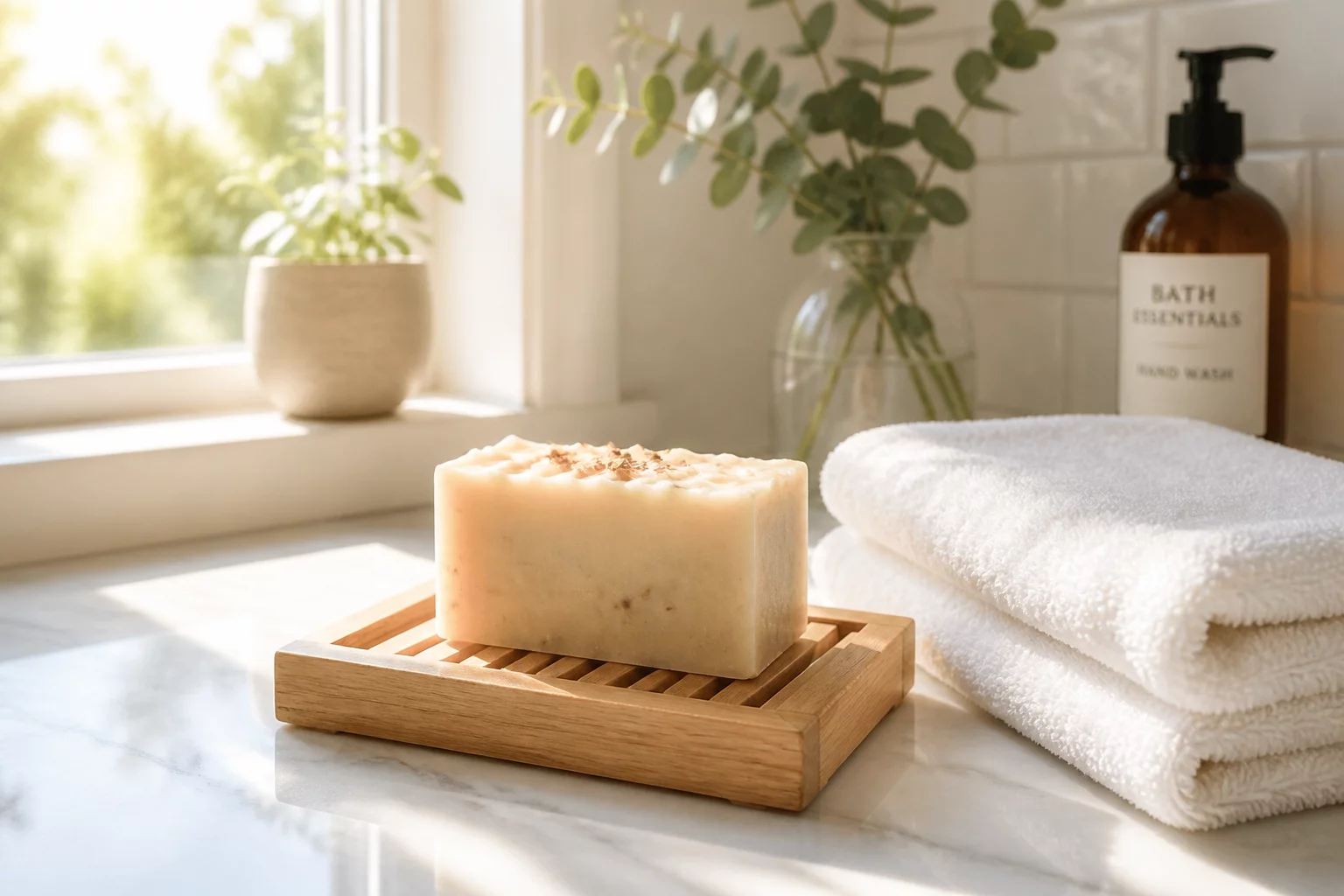
Handmade cold process soap is vastly different from mass-produced commercial bars. Because it retains all of its natural glycerin and contains zero artificial hardening chemicals, moisture management is the single most crucial factor in determining how long your bar lasts. Without proper airflow and drainage, an artisanal bar can turn soft and dissolve far quicker than it should.
The Anatomy of Cold Process Moisture
During traditional saponification, plant oils such as olive, coconut, and shea butter produce rich natural glycerin. Glycerin acts as a powerful humectant, drawing moisture from the surrounding air directly into the skin. When a soap bar rests in a puddle of standing water, that same humectant quality causes the bar to absorb water continually, softening its structure from the bottom up. Elevating the bar away from direct spray and pooling liquid allows the outer layer to harden naturally between uses.
"A dry soap bar is a durable soap bar. Good drainage and ventilation will easily double the lifespan of handcrafted botanicals."
— Liam Smith, Senior Soap Artisan
Selecting the Right Storage Accessories
Not all soap dishes support cold process bars equally well. Flat ceramic or plastic dishes without drainage holes trap water underneath, creating a mushy layer that wastes precious soap. Instead, choose accessories designed specifically for airflow and drainage:
- Slatted Wooden Soap Decks: Natural cedar or bamboo decks lift the bar entirely above pooled moisture and promote all-around evaporation.
- Textured Silicone Soap Savers: Porous, flexible pads allow continuous air circulation while gripping smooth bathroom tiles firmly.
- Hanging Sisal Soap Bags: Woven plant-fiber pouches keep bars suspended in open air and double as gentle exfoliating washcloths.
- Ventilated Linen Closets: Unwrapped extra bars stay crisp and fresh when stored in cool, dry drawers away from direct sunlight.
Long-Term Storage for Unopened Bars
If you purchase soaps in multipacks or stock up on seasonal botanicals, store unopened bars in a dark, dry, and well-ventilated space. Avoid airtight plastic containers or sealed bags, which trap ambient humidity and can cause botanical oils to lose their aromatic potency. Breathable paper wrapping or open wicker baskets inside a linen closet allow the soap to age further, making it harder and even longer-lasting over time.
Key Soap Care Takeaway
Always place your active soap bar on a well-draining slatted dish away from the direct shower stream. Keep your backup bars in a dry, ventilated closet so natural essential oils remain vibrant and the bars age to maximum density.
Reader Notes & Reviews
Eleanor Vance
Verified BuyerSwitching to a slatted wooden tray made a massive difference
I used to keep my handmade bars in a flat ceramic tray and wondered why they got soft so quickly. After switching to a raised bamboo rack as suggested in this article, my soap stays hard and firm between showers. It easily lasts twice as long now!